

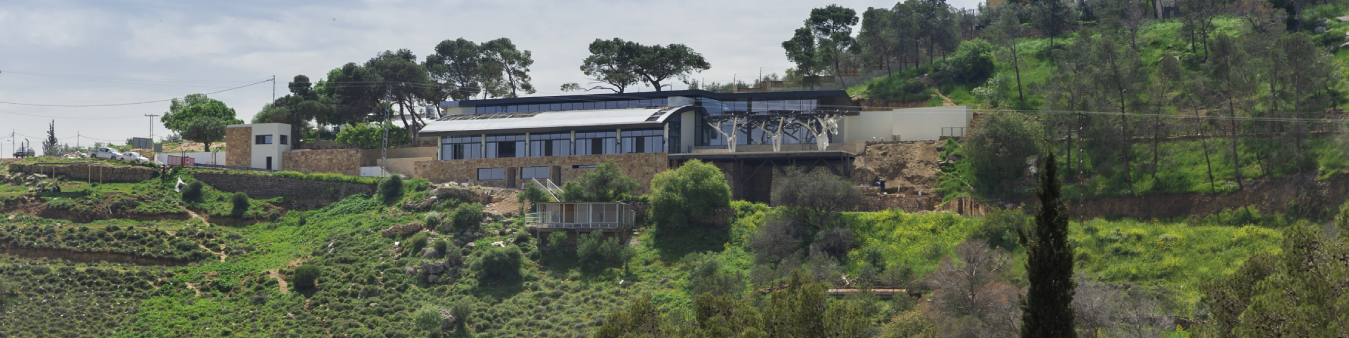
Botanical gardens are defined as "institutions that maintain documented collections of natural plants in that country with complete information on each plant serving as a documented identification of the plant for purposes of scientific research, conservation, display, education and utilization".
{ That We may produce therewith corn and vegetations }
an-naba { 15 }
Speech of the President of the Royal Botanical Garden, Her Highness Princess Basma Bint Ali
With all the meanings of determination and persistence baptized with love for the homeland and preserving its precious capabilities and rich natural heritage, with which God loved Jordan. And reinforced by the state of static love within me for nature and plants, the idea of establishing the Royal Botanic Garden was born to be the main reference for plants and to ensure their sustainability for future generations. The support and encouragement of His Majesty, the late King Hussein bin Talal, may God rest his soul, came to establish a framework concerned with plants and the protection of biodiversity, the engine and motivation to move forward in translating the idea into action on the ground. The arduous and enjoyable journey of incorporation began by communicating with the concerned authorities locally and internationally. Accordingly, the development of the interim work plan and the development of a database of the reality of plant diversity was initiated, and moving forward in selecting the permanent site for the garden in the Tal Al-Rumman area, north of the capital, Amman. To be the incubator for this beautiful mosaic of the Jordanian plant, and a scientific and research reference for experts and those interested with the grateful assistance of scholars and scientists in botany at the national and international levels. Indeed, the work plan prepared for the establishment of major nurseries and a seed bank has been implemented to preserve the genetic diversity of plants, in addition to the establishment of a herbarium for plant species. Work is underway to establish twenty gardens for plants and a shelter for perennial trees and cultivated aromatic plants, and 2,531 plant species have been documented, specifically those threatened with extinction. This is in addition to establishing an integrated building to receive visitors and those interested. Preparations are under way to establish a training and scientific research center. In the near future, we look forward to opening the garden to visitors, scholars and researchers, to see this national achievement, learn about the types of plants and enjoy the fragrance of Jordanian nature. This remarkable achievement would not have been possible without the support of His Majesty King Abdullah II Bin Al Hussein and successive governments represented by the Ministries of Agriculture, Environment and Planning, Jordanian universities and the community of scholars and experts that came into being. Through which we were able to put the name of Jordan on the map of the natural plant world, and rise to the ranks of developed countries in this field.

Director General of the Royal Botanic Garden
The Royal Botanic Garden represents a full-fledged success story in the field of national plant conservation, according to which Jordan has been placed on the global plant map and has become a difficult figure in the plant conservation equation and its sustainability at the regional and international levels. This prestigious position that Jordan has reached due to the benevolence of the people of the country, led by Princess Basma Bint Ali, who initiated the establishment of the botanical garden, was based on the natural demographic heritage of the eastern Mediterranean region, which God endowed with a balanced climate for its people to be a "cradle" for the wild parents of plants, specifically the basket Cereals that provide food security for the inhabitants of the earth, the most prominent of which are wheat, barley, lentils, and the olive tree. In view of the size of the achievement that has been achieved, we find that the garden, since its inception, has taken upon itself the work of documenting the national plant and its locations by 2531 plant species, and a classification of plants that are rare, threatened, and common has been developed and approved by international references. This is in addition to establishing a seed bank to take advantage of them and work to multiply them, especially those threatened with extinction, and work to restore and rehabilitate habitats that were destroyed by various circumstances. In the field of human investment, projects and programs have been implemented to rehabilitate individuals to enable them to deal professionally with germination. Work is currently underway to prepare the infrastructure for the establishment of 20 model gardens for cultivating plants of all kinds, in preparation for investment in this promising sector, specifically plants of economic, aromatic and medicinal value such as (thyme, wormwood and Qaysum). And in a parallel line and within the framework of interaction with all segments of society, the garden has developed an integrated plan to establish the best partnerships with institutions, bodies and individuals to view and benefit from plant habitats throughout the country and cooperate to preserve them. In order to make this endeavor a success, the park initiated a plan for media and communication to highlight the size of the achievement that has been achieved and to review the initiatives and projects implemented by the park to ensure positive interaction and the dissemination of interest. Here, reference should be made to constructive cooperation and joint work with the Ministries of Agriculture and Environment to serve the national plant and its sustainability. At the international level, the garden management was keen to open up to the relevant international institutions, bodies and organizations working in the field of environment and natural plants, represented by the International Union for Conservation of Nature (IUCN) and the International Botanic Gardens Organization (BGCI). The Royal Botanical Garden has assumed a prominent position at the international level and has become an essential reference and house of expertise for international bodies for its role in providing expertise and advice to the countries of the region in the field of natural plants.

Founding of the Royal Botanic Garden
The Royal Botanical Garden was established in 2005 at the initiative of Her Royal Highness Princess Basma Bint Ali and with the generous support of His Majesty King Abdullah II, may God protect him, to play its pioneering role in the field of protecting biodiversity and taking care of Jordan’s indigenous plants in particular, with a focus on integrating and involving the local community in management and development. sustainable.
The Royal Botanic Garden is one of the most important non-profit environmental institutions in Jordan and the leading institution in the field of botanical gardens, not only at the level of the Kingdom of Jordan, but also on a regional scale. Where experts in the garden are working continuously to document the Red List of Jordan's endangered plants in order to study the most effective ways to preserve and protect them from the threat of extinction.
Vision the Royal Botanic Garden
See the Royal Botanic Garden The Royal Botanic Garden sees a community that no longer needs conservation as it is well-accommodated The interrelationship between humans, plants, and ecosystems in a way that guarantees individuals a dignified and sustainable life.
Mission Royal Botanic Garden
Preserving local plant life in Jordan by restoring and restoring degraded ecosystems and providing institutional and support for conducting research and presenting these practices to meet the environmental challenges of our time and renewing hope for the future.
Objectives of the Royal Botanic Garden
- Preserving Jordanian local plants and their genetic origins.
- Rehabilitation and representation of a range of local environmental habitats.
- Conducting scientific research related to local plants and their environment.
- Education and spreading environmental awareness.
- Adaptive development of local communities.
- Learn to infer sustainable living methods.
- Rehabilitation of pastures in cooperation with the local community
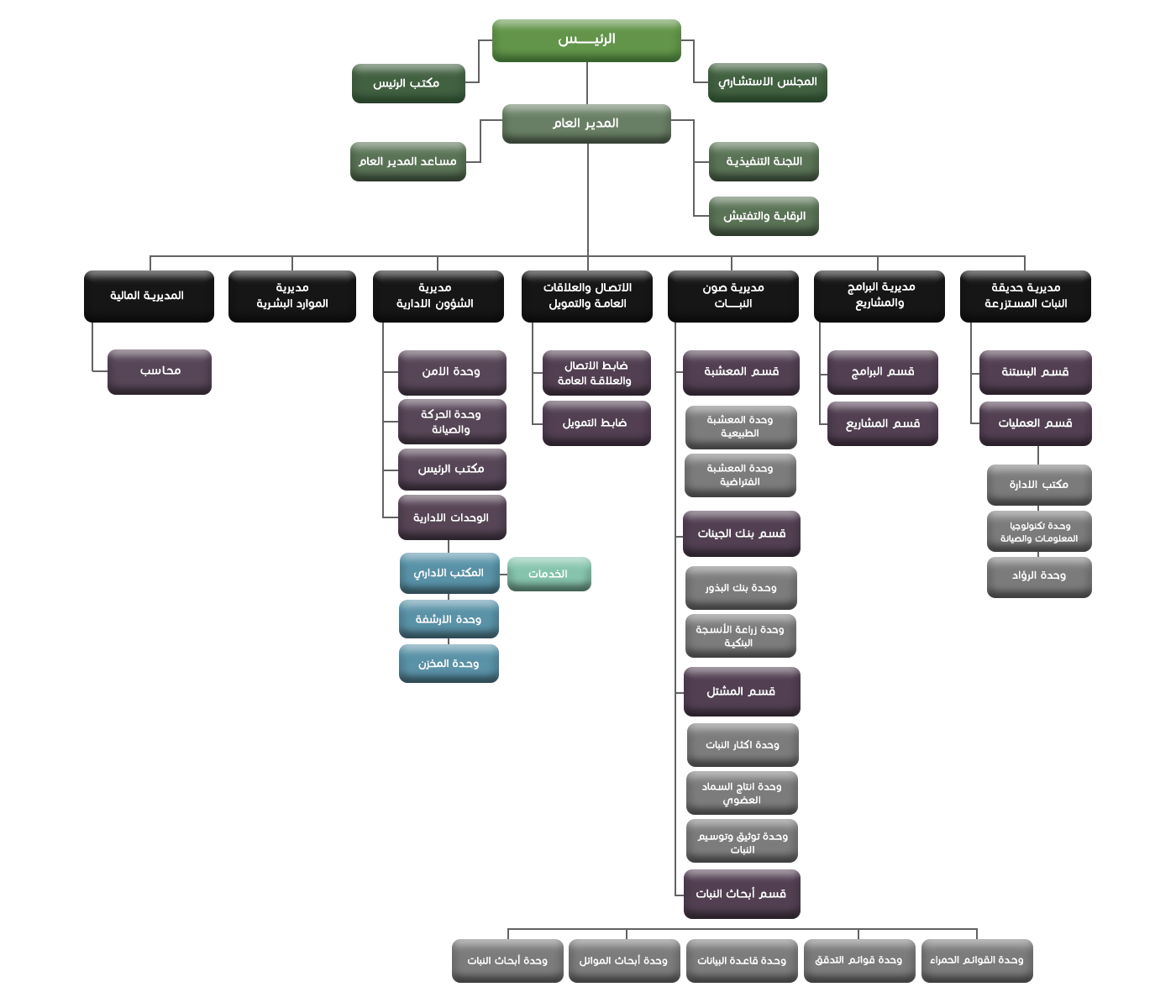
Organizational structure and functional units in the Royal Botanic Garden
Organizational structure and functional units in the Royal Botanic Garden
The organizational structure of the Royal Botanical Garden as approved by Her Highness Princess Basma Bint Ali in June 2020
Her Highness Princess Basma bint Ali, the “founding president,” heads the Royal Botanic Garden Department, and she is the direct reference for the Director General. The activities and tasks of the Royal Botanic Garden are accomplished through a group of directorates that coordinate their work through departments and according to the structure below: