
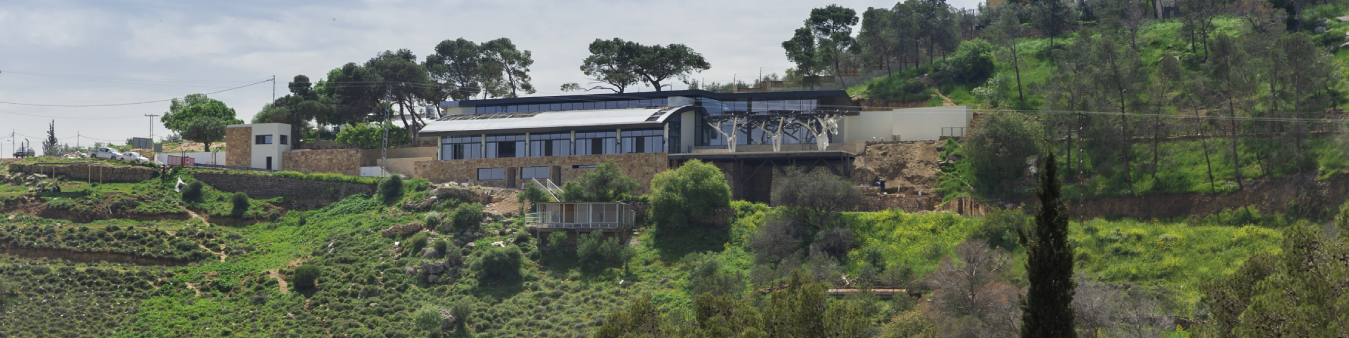
Concept of Social Responsibility from the Perspective of the Royal Botanic Garden

The Royal Botanic Garden believes that achieving its vision, mission, and goals requires genuine involvement from local communities. This makes open intercommunity dialogue with these communities essential for enhancing the capabilities and efficiency of community members and empowering women, resulting in effective contributions from all community members in implementing programs and projects that improve their living standards. The garden is committed to fulfilling its role in educating and raising environmental awareness about sustainable living at a national level.


Support and development of local communities.
  •  
  • Supporting the local community in the village of Tal Al-Rumman:

Since its establishment, the garden has started building communication bridges with the local community in Tel al-Rumman, exploring ways to collaborate with them and clarifying its goals and objectives. The management of the Royal Botanic Garden emphasizes the importance of enhancing the role of the local community as an active and essential partner in the success of the garden’s mission.

As part of these efforts, the "Community-Based Rangeland Rehabilitation" (CBRR) program has built strong relationships with community members to include them in efforts to conserve biodiversity.

The garden has focused on enhancing the capacity of the local community by implementing practical programs that involve local community members in activities such as site rehabilitation and increasing plant diversity by combating overgrazing and implementing managed grazing programs. Additionally, awareness courses have been provided regarding animal health programs and agricultural records.

Open intercommunity dialogue with all segments of the local community ensures ongoing opportunities for exchanging views with the garden, paving the way for education on sustainable water management, alternative energy use, and income-generating alternative projects, such as beekeeping and honey production.

The garden considers its ability to integrate the local community in Tel al-Rumman into its work programs and transform it into a fundamental supporter and active participant in achieving its goals a significant achievement that it takes pride in it.

  • Supporting women of local community in establishing Tal Al-Rumman Women's Cooperative Association (STR):

The Royal Botanic Garden provided support to a group of women in the Rumman community to institutionalize social work in the village by establishing a cooperative society that contributes to the empowerment of women and securing various sources of income through the implementation of development projects with the participation of Rumman women.

The association was registered in December 2016, and the Garden works to network the association with other institutions with experience in the field of women's associations to obtain suitable ideas that the association can benefit from by application.

Among the most important achievements of the association is the establishment and opening of its own productive kitchen. It also holds training courses for members of the association and local community women in many areas such as: cooking - crochet and embroidery arts - first aid, in addition to various awareness programs related to health, sustainable lifestyles and small income-generating projects


  • Developing local communities

The Rangeland Rehabilitation Program was able to share the success stories of the Royal Botanic Garden with the local community in Tal Al-Rumman, with farmers in other local communities inside and outside Jordan who suffer from conditions similar to the Tal Al-Rumman community, and development projects were implemented in those areas with the participation of other local and international bodies in order to help farmers gain experience and share knowledge.


Education in management and sustainable living

Learning good management and sustainable living is one of the most important basic concepts that the Royal Botanic Garden works to consolidate, as well as to use while in using it all decisions that are taken, since all projects and programs implemented by the Garden depend on creating sustainable development and wise management of natural resources so that humans and nature live in perfect harmony.

One of the most important examples of management and sustainable living projects is what was implemented within the rangeland rehabilitation project in cooperation with the local community. This project began in 2007 by targeting five families of livestock breeders in the local community. It has now expanded to include twenty-one families, where the Garden supports these families by providing fodder and natural pastures within an annual plan, as well as the veterinary services. A pilot project for the production and marketing of dairy products was set up, in addition to training in income-generating programs, such as sewing, handicrafts, beekeeping and mushroom production.


Promoting equality and combating discrimination
    • Implementation of equal employment opportunities

The Garden effectively applies the principle of equal employment opportunities without favoritism to any individual or any discrimination between one person and another based on religion, origin, sex or color. Whereby, any person who meets the required conditions has the opportunity to apply for a job, and selection is made on objective bases based on competency standards in terms of education and experience, and according to the job description.

    • People of determination

The Garden is particularly concerned with giving opportunities to people of determination, people with special needs to work within its staff, as they are employed according to their abilities and scientific and practical desires, providing them with a suitable work atmosphere, benefiting from their capabilities, and helping them enhance their self-confidence. In view of the distinctive terrain characteristics of the Royal Botanical Garden’s site, it was considered to provide special corridors for people with special needs who need to move around by wheelchair on the site.