



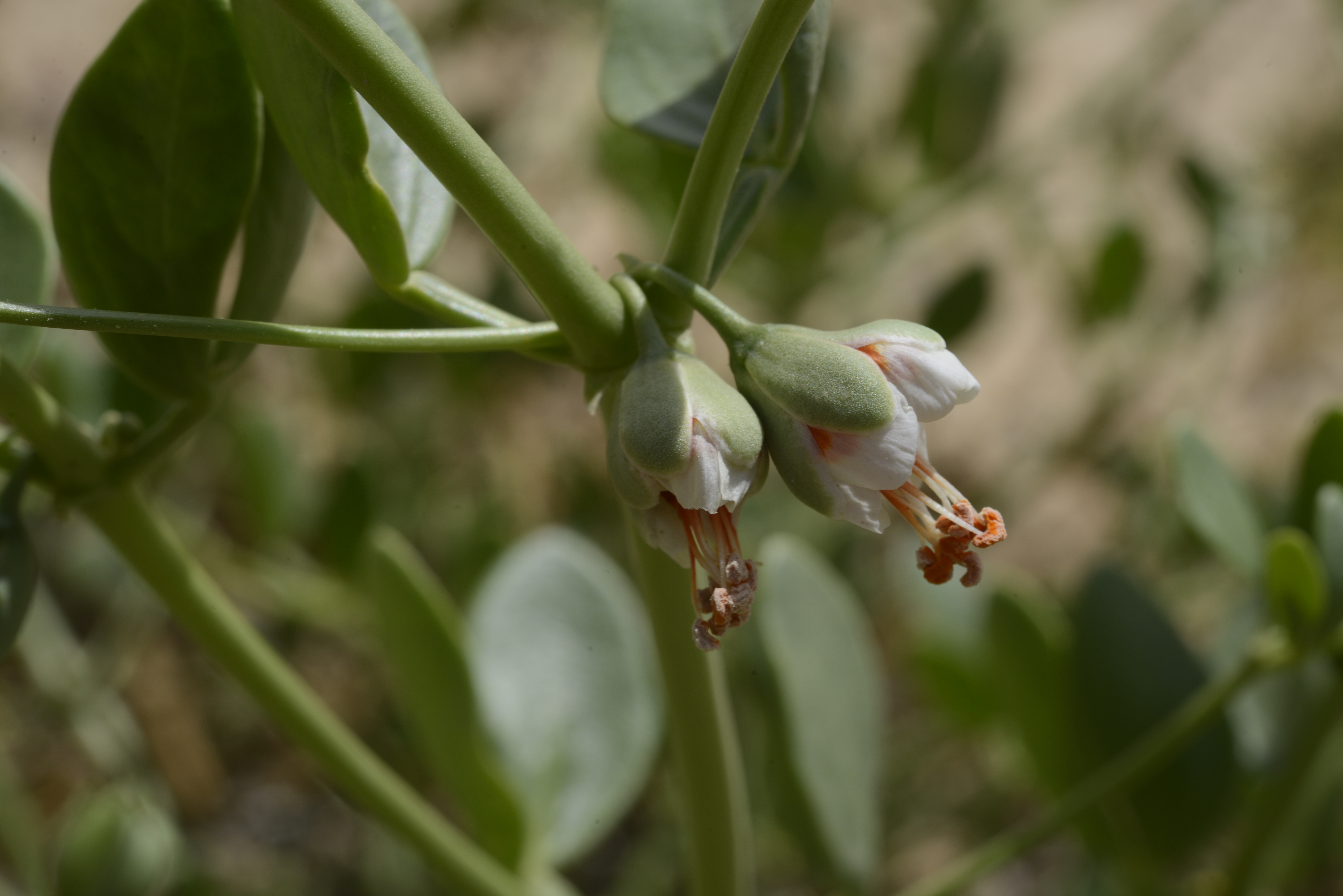
Plants with two cotyledons—dicots—often display petaled flowers in groups of five, and are seen most frequently in the families Ranunculaceae, Geraniaceae, Rosaceae, and Malvaceae. These constant iterations have intrigued botanists and gardeners and fueled their curiosity about synchronicity within the natural world for centuries. The mathematician Fibonacci included observations of the parts of Venus in his theory of cosmic numerical harmony. Dicotyledonous plants with five petals native to Jordan make up the ornamental displays in this garden.