Methods of Plant Propagation
Plants are propagated by the sexual and vegetative method, and by cultivation by cuttings and bulbs, which are collected through field trips, in addition to planting the seeds stored in the seed bank. The nursery workers document all procedures and transactions necessary for the production of seedlings for data documentation and protocols creation for plant propagation;
Among the most important methods of propagating plants used on the site:
- Sexual reproduction by seeds
- Vegetative propagation by cuttings:
- Peripheral cuttings
- Solid cuttings
- Tender cuttings
Some seeds need special treatments before planting, in order to break the dormancy phase in them, and these treatments include:
- Scratching
- Soaking in cold water
- Soaking in hot water
- Soaking with sulfuric acid
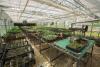
After conducting one of these treatments on the plant species, it is planted in beds inside the greenhouse in order to provide the necessary moisture for germination, while checking the seeds in those beds;
All information on plant species is documented, starting from receiving seeds from the seed bank until planting them in natural habitats.
Propagation by cutting.
- Propagation by cuttings is done after taking a part of the plant that contains at least 3 buds, where the cuttings are cut diagonally from the top and horizontally from the bottom;
- The cut bottom part is dipped horizontally with rooting hormone. The rooting hormone for soft cuttings defers from the one for hard cuttings;
- Then the cuttings are placed in a planting pot that contains Perlite, while keeping monitoring them periodically until the roots are formed;
- After the roots are formed, the cuttings are transferred separately to cultivation vessels that contain the cultivation medium approved in the Royal Botanic Garden. The cultivation medium consists of:
- Red soil
- Organic fertilizer (compost), which is produced in the Garden’s nurseries.
Method of producing organic fertilizer (compost) in the nurseries of the Royal Botanic Garden:
Special boxes are being built to produce organic fertilizer consisting of:
- Animal waste (horse manure)
- Plant residues collected from the Garden’s site
- Lime
These components are mixed and placed inside boxes designated for production, and sealed tightly, and they are moved twice a month, then they are ready for use after 6 months;
All procedures necessary for the production of seedlings are documented in order to create and develop protocols for plant propagation, as an identification card is used for each plant species in the nurseries. The card contains:
- Scientific name.
- Common name.
- Private number.
- Protection status of the plant species.
The protection status of plant species is distributed according to the following categories:
- Critically endangered: represented by the color red.
- Endangered: represented by the color orange.
- Vulnerable: represented by the color yellow.
- Least Concern: represented by the dark green color.
- Near Threatened: represented by the light green color